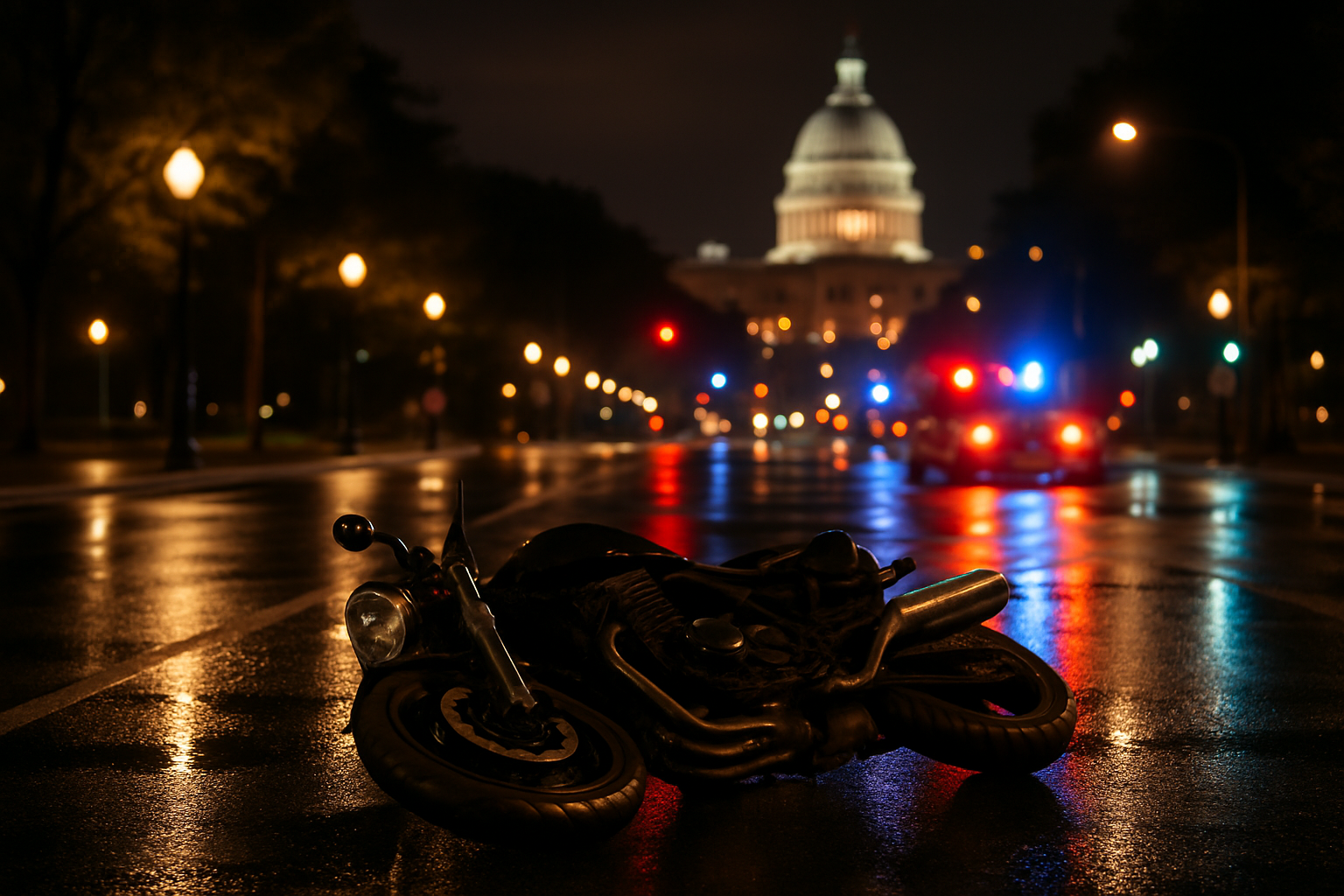
Motorcycle Accidents in Washington, D.C.: What Every Rider Needs to Know
Riding a motorcycle through the streets of Washington, D.C. — from the busy corridors of Pennsylvania Avenue to the winding lanes near Rock Creek Park — offers a freedom that no car can match. But with that freedom comes significant risk. Motorcycle riders are among the most vulnerable people on the road. According to the National Highway Traffic Safety Administration (NHTSA), motorcyclists were nearly 27 times more likely than passenger car occupants to die in a crash per vehicle mile traveled in 2024.
If you or someone you love has been injured in a motorcycle accident in the District of Columbia, understanding your legal rights is critical. D.C. has specific laws that can profoundly affect your ability to recover compensation — laws that differ in important ways from most other states. This guide provides a general educational overview of those laws so you can make informed decisions about your next steps.
This article is intended for general informational purposes only and does not constitute legal advice. For guidance specific to your situation, please consult a qualified personal injury attorney.
Washington, D.C. Motorcycle Laws Every Rider Must Follow
Before exploring what happens after an accident, it is important to understand the rules of the road that apply to motorcyclists in the District. Compliance with these laws can directly affect your legal claim if you are ever injured.
Helmet and Eye Protection Requirements
Washington, D.C. enforces a universal helmet law. Under D.C. Code § 50-1651, every person operating or riding on a motorcycle in the District must wear a Department of Transportation (DOT)-approved helmet. This applies equally to drivers and passengers, with no exceptions based on age or experience. The law also applies to motor scooters and motorized bicycles.
In addition to a helmet, motorcyclists must wear protective eye gear — such as goggles or a face shield — unless their motorcycle is equipped with a windshield. Failing to wear a helmet is not just a traffic violation; if you are injured without one, the defense may argue that you contributed to the severity of your own injuries, which can have serious consequences for your compensation claim.
Licensing and Registration Requirements
Riders must obtain a motorcycle endorsement on their driver's license, which involves passing both a written test and a skills test. The minimum age to obtain a motorcycle license in Washington, D.C. is 18 years old. Additionally, all motorcycles must be registered with the DC DMV, and owners must carry valid insurance.
Lane Splitting Is Illegal in D.C.
Motorcycle riders are not permitted to lane split in Washington, D.C. Lane splitting — the practice of riding between two lanes of slow-moving or stopped traffic — is prohibited. If you are involved in an accident while lane splitting, this could significantly affect your eligibility to recover compensation.
Additional Rules of the Road
- Motorcycles must have a left-side rear-view mirror.
- Motorcycles must have a passenger footrest and seat whenever carrying a passenger.
- Riders must obey all posted speed limits, use proper turn signals, and yield to pedestrians.
- The use and possession of radar detectors are prohibited in D.C.
- Motorcycles cannot be parked on the sidewalk.
Mandatory Insurance Requirements for D.C. Motorcyclists
Washington, D.C. requires all motorcyclists to carry liability insurance. Riders who fail to carry the required coverage can face serious penalties, including fines, license suspension, and impoundment of their motorcycle. The minimum coverage requirements are:
- Bodily Injury Liability: $25,000 per person / $50,000 per accident
- Property Damage Liability: $10,000 per accident
- Uninsured/Underinsured Motorist Bodily Injury: $25,000 per person / $50,000 per accident
- Uninsured/Underinsured Motorist Property Damage: $5,000 per accident (with a $200 deductible)
These are minimum requirements. Because a serious motorcycle injury can generate medical bills that far exceed another driver's policy limits, riders may want to consider carrying higher coverage levels. If you are hit by an uninsured or underinsured driver, your own uninsured motorist coverage may be your primary source of compensation.
Common Causes of Motorcycle Accidents in Washington, D.C.
D.C.'s dense urban environment — characterized by heavy traffic, narrow lanes, construction zones, buses, and rideshare vehicles — creates unique hazards for motorcyclists. Most motorcycle accidents occur as a result of driver error or negligence. Common causes include:
- Left-turn collisions: Drivers making left turns often misjudge a rider's speed or simply fail to see them.
- Distracted driving: Phone use, inattention, and urban distractions make it harder for drivers to notice motorcycles.
- Unsafe lane changes: Drivers who fail to check blind spots before merging can strike riders without warning.
- Drunk or drugged driving: Impaired drivers pose an extreme risk to motorcyclists.
- Hazardous road conditions: Potholes, uneven pavement, loose gravel, and poorly marked construction zones can cause a rider to lose control — even when a car driver would be unaffected.
- Dooring: A driver opening a car door into the path of an oncoming motorcyclist is a common and dangerous hazard on D.C. streets.
- Tailgating and sudden stops: Following too closely near red lights or bus lanes gives riders little time to react.
- Defective motorcycle parts: Mechanical failures due to manufacturing defects can also contribute to crashes.
Common Motorcycle Accident Injuries
Because motorcycles offer little protective structure around the rider, even moderate-speed crashes can result in devastating, life-altering injuries. Common injuries sustained in D.C. motorcycle accidents include:
- Traumatic brain injuries (TBIs), even when a helmet is worn
- Spinal cord injuries and paralysis
- Compound fractures requiring surgical repair
- Road rash — severe abrasions that often require skin grafting or surgery
- Internal bleeding and organ trauma
- Neck and back injuries
- Amputation
- Scarring and permanent disfigurement
The aftermath of a serious motorcycle crash can involve extended hospital stays, months of physical rehabilitation, significant lost income, and permanent disability. These are exactly the kinds of losses that a personal injury claim is designed to help address.
Washington, D.C.'s Negligence Rules and How They Affect Your Claim
This is arguably the most legally complex — and consequential — aspect of a D.C. motorcycle accident claim. Understanding how fault is evaluated in the District could mean the difference between recovering full compensation and receiving nothing at all.
D.C.'s Contributory Negligence Doctrine
Washington, D.C. is one of only a small number of jurisdictions in the United States that still applies a pure contributory negligence standard to most personal injury claims. Under this doctrine, if a plaintiff is found even 1% at fault for their own accident, they can be completely barred from recovering any compensation — regardless of how severely they were injured or how reckless the other party was.
This rule makes it critically important for injured motorcyclists to avoid making recorded statements to insurance adjusters without legal counsel, and to work with an attorney who can carefully document and present evidence of fault.
The "Vulnerable User" Protection for Motorcyclists
Here is where D.C. law offers motorcyclists an important and often overlooked protection. Under D.C. Code § 50-2204.51, motorcyclists are classified as "vulnerable road users" — the same protected category that includes pedestrians, cyclists, and e-scooter riders.
This classification triggers a critical legal protection under D.C. Code § 50-2204.52: in a collision between a motorcyclist and a motor vehicle, a rider's own fault does not automatically bar their claim. Instead, recovery is only barred if the rider's negligence was greater than the combined fault of all other parties responsible for the crash. In a typical one-driver case, this means a motorcyclist can recover compensation as long as they were not more than 50% at fault. This is a significant departure from the harsh all-or-nothing contributory negligence rule that applies to ordinary motor vehicle claims.
What Compensation Can You Recover After a D.C. Motorcycle Accident?
If you are able to establish that another party's negligence caused your injuries, you may be entitled to seek compensation for a wide range of economic and non-economic damages, including:
- Medical expenses (past and future)
- Physical therapy and rehabilitation costs
- Lost wages and diminished future earning capacity
- Pain and suffering
- Loss of enjoyment of life
- Property damage to your motorcycle
- Funeral expenses in wrongful death cases
Importantly, Washington, D.C. places no cap on compensatory damages in personal injury cases, meaning the full extent of your losses can be pursued.
Critical Deadlines: The Statute of Limitations in D.C.
One of the most important — and time-sensitive — facts to understand is that D.C. law imposes strict deadlines for filing a motorcycle accident lawsuit.
- Personal Injury Claims: Under D.C. Code § 12-301(8), you generally have three years from the date of the accident to file a personal injury lawsuit. Missing this deadline will almost certainly result in the court dismissing your case, regardless of how strong your claim may be.
- Wrongful Death Claims: If a motorcycle accident results in a fatality, the statute of limitations for a wrongful death lawsuit is two years from the date of death under D.C. Code § 16-2701.
- Claims Against the District Government: If your crash involved a roadway defect, missing signage, or a District-owned vehicle, you must file a formal Notice of Claim with the Mayor's office within 6 months of the incident under D.C. Code § 12-309. This is a separate and earlier deadline that can bar your claim entirely if missed.
While three years may seem like ample time, insurance negotiations can drag on for months, and gathering the evidence needed to build a strong case takes time. Attorneys generally advise beginning the legal process as early as possible after an accident.
Steps to Take After a Motorcycle Accident in Washington, D.C.
The actions you take in the hours and days following a crash can significantly impact the strength of your legal claim. Here are general steps to consider:
- Seek immediate medical attention, even if your injuries seem minor. Some serious injuries, including internal bleeding and traumatic brain injuries, may not present obvious symptoms right away.
- Report the accident to DC Metropolitan Police and obtain a copy of the official accident report.
- Document the scene by photographing the vehicles, road conditions, your injuries, and any relevant signage or hazards.
- Gather contact information from witnesses, the other driver(s), and any responding officers.
- Notify your insurance company of the accident, but do not provide a recorded statement without first consulting an attorney.
- Preserve your motorcycle and gear as evidence — do not repair or dispose of them until you have spoken with a lawyer.
- Consult a personal injury attorney experienced in D.C. motorcycle accident law as soon as possible to evaluate your claim, understand your rights, and ensure all deadlines are met.
Conclusion: Protect Your Rights After a D.C. Motorcycle Accident
Motorcycle accidents in Washington, D.C. can be physically devastating and legally complex. Between the District's contributory negligence doctrine, the important but nuanced "vulnerable user" protections, strict filing deadlines, and mandatory insurance requirements, injured riders face a legal landscape that is unlike most other states.
At Leeds Law Firm, our personal injury team understands the unique challenges that D.C. motorcyclists face after a crash. We are committed to helping injured riders understand their rights and pursue the full compensation they deserve. If you or a loved one has been hurt in a motorcycle accident in Washington, D.C., we encourage you to reach out for a consultation today — because time matters, and so do your rights.