Short answer: After a car accident in Colorado, stay at the scene, call 911 if anyone is injured, exchange information with the other driver, and report the crash as required by law. Colorado is an at-fault state, so the driver who caused the accident is responsible for damages. You generally have three years from the crash date to file a personal injury lawsuit.
Colorado is an at-fault state, not a no-fault state, which means injured drivers must pursue compensation through the at-fault driver's liability insurance rather than their own policy first. The state follows a modified comparative negligence rule under auto accident cases, so your own share of fault can directly reduce or eliminate any recovery.
What should I do at the scene of a car accident in Colorado?
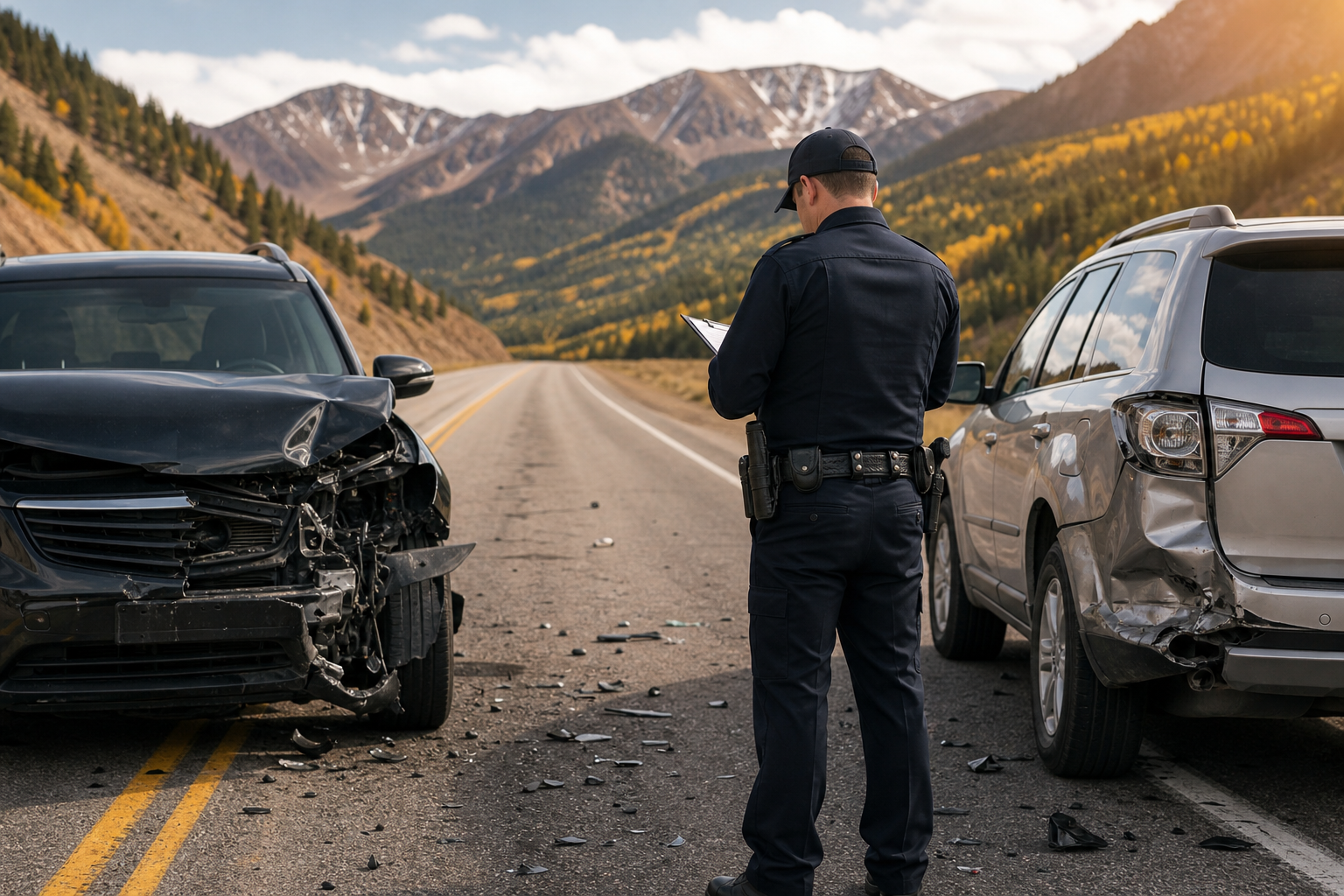
Stay at the scene and take these steps in order:
- Check for injuries and call 911 immediately if anyone is hurt or killed.
- Move to safety if vehicles are blocking traffic and it is safe to do so.
- Call the police. Under C.R.S. § 42-4-1603, you must give immediate notice to the nearest law enforcement office when an accident results in injury, serious bodily injury, or death.
- Exchange information with every other driver: name, address, driver's license number, license plate, and insurance carrier and policy number.
- Photograph everything before vehicles are moved: vehicle positions, damage, skid marks, traffic controls, and any visible injuries.
- Collect witness contact information while people are still at the scene.
- Avoid admitting fault or making detailed statements about what happened beyond what police ask.
Do I have to report the accident to the Colorado DMV?
Yes, in most cases. Colorado auto accident reporting requirements have two separate tracks:
- Immediate police report: Under C.R.S. § 42-4-1606, any accident involving injury, death, or property damage must be reported immediately to law enforcement.
- Written DMV report: If no law enforcement officer files a report, you must submit your own written report to the Colorado Department of Revenue (DMV). You can file online through the Colorado DMV or by mail, and you must do so within the required timeframe. Failing to file when required is a class 2 misdemeanor traffic offense.
- When police handle it: If an officer responds and completes a report, you generally do not need to file a separate DMV report, but confirm the report was actually filed.
How does Colorado's fault system affect my claim?
Colorado is an at-fault state, so the driver who caused the crash is legally responsible for the other party's injuries and property damage. Two rules shape every claim:
| Rule | How it works in Colorado |
|---|---|
| At-fault system | You pursue the other driver's liability insurance for your damages, not your own policy first. |
| Modified comparative negligence (C.R.S. § 13-21-111) | Your damages are reduced by your percentage of fault. If you are found 50% or more at fault, you recover nothing at all. |
| Minimum liability coverage | Colorado requires at least $25,000 per person / $50,000 per accident for bodily injury and $15,000 per accident for property damage (25/50/15). |
Because fault percentages directly control your recovery, the evidence you gather at the scene matters from the very first minutes after a crash.
What evidence should I collect after the accident?
Strong documentation protects your ability to recover compensation. Gather as much of the following as possible:
- Police report number so you can request the official report later from the Colorado DMV or the responding agency.
- Photos and video of vehicle damage, road conditions, weather, traffic signals, and any injuries.
- Witness statements and contact details from anyone who saw the crash.
- Medical records for every treatment you receive, starting with any same-day emergency care.
- Proof of lost income if the injury causes you to miss work.
- Repair estimates or receipts for vehicle and property damage.
How long do I have to file a car accident claim in Colorado?
Missing a deadline can permanently bar your claim. Key deadlines include:
- Personal injury lawsuit: Three years from the date of the accident under C.R.S. § 13-80-101(1)(n). This is longer than the two-year deadline that applies to most other personal injury claims in Colorado.
- Wrongful death: Two years from the date of death in most cases. For wrongful death claims, the deadline is shorter, so prompt action is especially important.
- Claims against a government entity: If a road defect or government vehicle contributed to the crash, you may need to file a notice under the Colorado Governmental Immunity Act (C.R.S. § 24-10-109) within 182 days of the incident, which is far shorter than the general civil deadline.
- Minors: The deadline may be tolled until a minor victim turns 18, under C.R.S. § 13-81-103.
What damages can I recover after a Colorado car accident?
Colorado allows injured drivers to pursue both economic and non-economic damages. For cases filed on or after January 1, 2025, non-economic damages such as pain and suffering are capped at $1.5 million under Colorado's revised damages cap. Economic damages such as medical bills, lost wages, and future care costs are not subject to the same cap. Your total recovery is then reduced by any percentage of fault assigned to you under C.R.S. § 13-21-111.
Frequently asked questions
Should I accept the insurance company's first settlement offer?
Not necessarily. Initial offers often reflect the insurer's interests, not the full value of your claim. Once you accept a settlement, you typically give up the right to seek more compensation later, even if your injuries turn out to be more serious than expected.
What if the other driver has no insurance or not enough coverage?
Colorado requires insurers to offer uninsured and underinsured motorist (UM/UIM) coverage, though policyholders may reject it in writing. If the at-fault driver is uninsured or underinsured, your own UM/UIM policy may be a key source of recovery, subject to the same 50% fault bar under C.R.S. § 13-21-111.
What if I was partly at fault for the crash?
You can still recover damages as long as your share of fault is less than 50% under Colorado's modified comparative negligence rule (C.R.S. § 13-21-111). Your compensation is reduced in proportion to your fault percentage. At exactly 50%, recovery is barred entirely.
Can I file a claim if I was a passenger in the accident?
Yes. Passengers are generally not found at fault for a collision and may have claims against the at-fault driver, the driver of the vehicle they were riding in, or both. The same three-year statute of limitations and comparative negligence rules apply to passenger claims.
Do I need a lawyer for a Colorado car accident claim?
An attorney is not required, but serious injury cases, disputed fault, government entity involvement, or offers that seem low are situations where legal guidance can make a significant difference. Most personal injury attorneys handle car accident cases on a contingency basis, meaning no fee unless there is a recovery.
Talk to a personal injury lawyer
Colorado's at-fault system, the 50% comparative fault bar, and multiple overlapping deadlines make car accident claims more complex than they appear. A licensed attorney can review the specific facts of your situation, identify all potential claims, and help you understand what your options are before any deadline passes.
Leeds Law Firm, PLLC is a nationwide law firm with its principal office in Houston, Texas, handling employment law, personal injury, and estate planning matters. Personal injury cases are handled on a contingency basis: no fee unless we recover money for you, and the first consultation is free. Call 866-530-8070, available 24/7, or contact us online. Hablamos español.
This article is general information, not legal advice. Reading it or contacting the firm does not create an attorney-client relationship.